EX-001
Push-up
A fundamental bodyweight pushing exercise that primarily trains the chest, triceps, and anterior shoulders while requiring core stability.
The push-up is a fundamental bodyweight exercise that develops upper-body pushing strength, primarily targeting the chest, triceps, and anterior shoulders while also challenging core stability.
Push-ups build upper-body pushing strength with minimal equipment requirements. They primarily train the chest, triceps, and anterior shoulders while also requiring the trunk and hips to maintain a stable body position. They can be scaled through variations in hand position, elevation, range of motion, and resistance, making them useful for beginners through advanced trainees.
The standard push-up is suitable for beginners who can comfortably support their body in a high-plank position and control the movement. Beginners who cannot yet perform a full push-up with good form can start with an incline push-up and progress gradually.
How to do a Push-up
Start Position
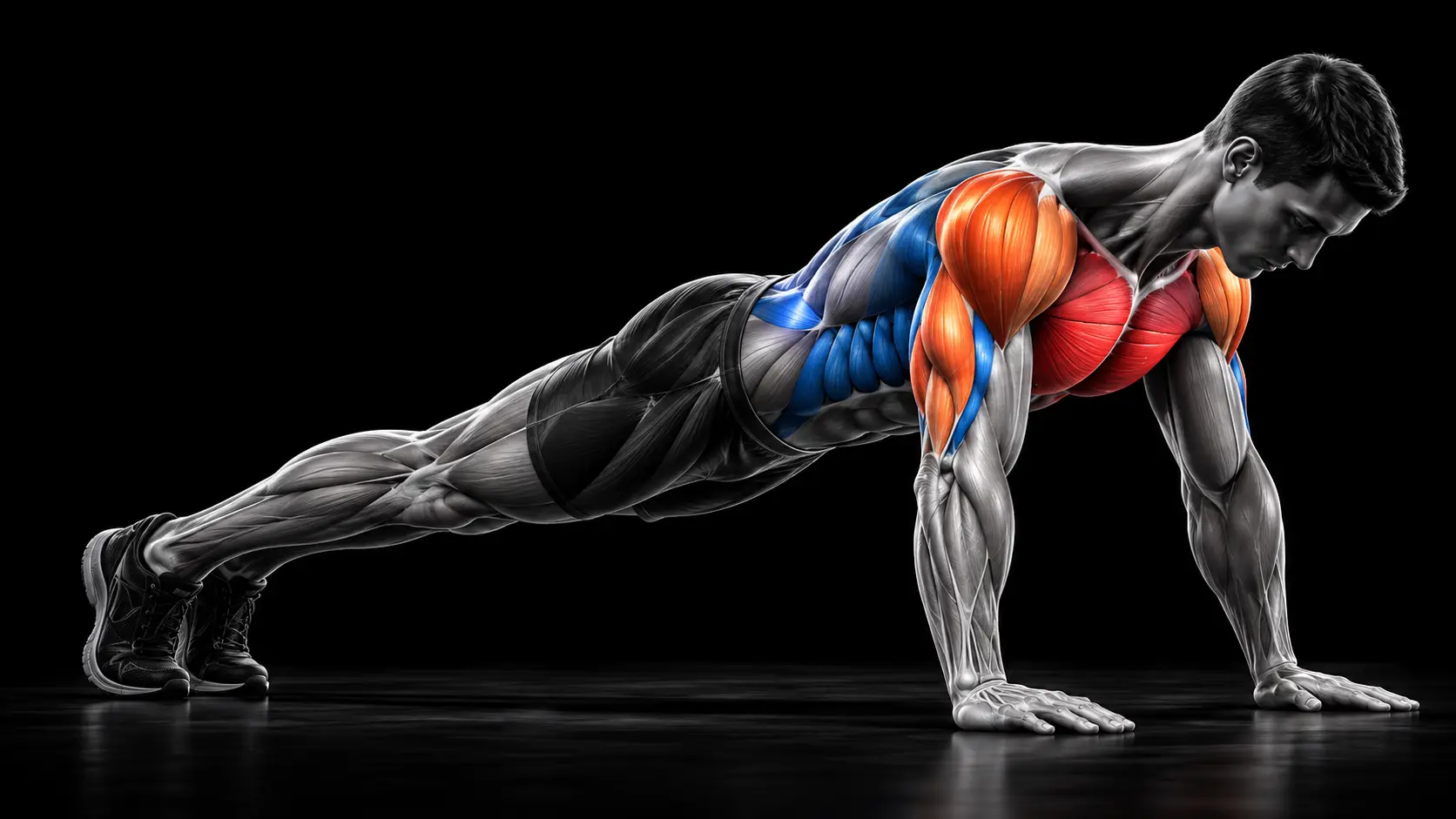
Start in a high plank position with your hands slightly wider than shoulder-width apart. Keep your arms extended, shoulders stacked over your hands, legs straight, and your body aligned from head to heels.
Movement
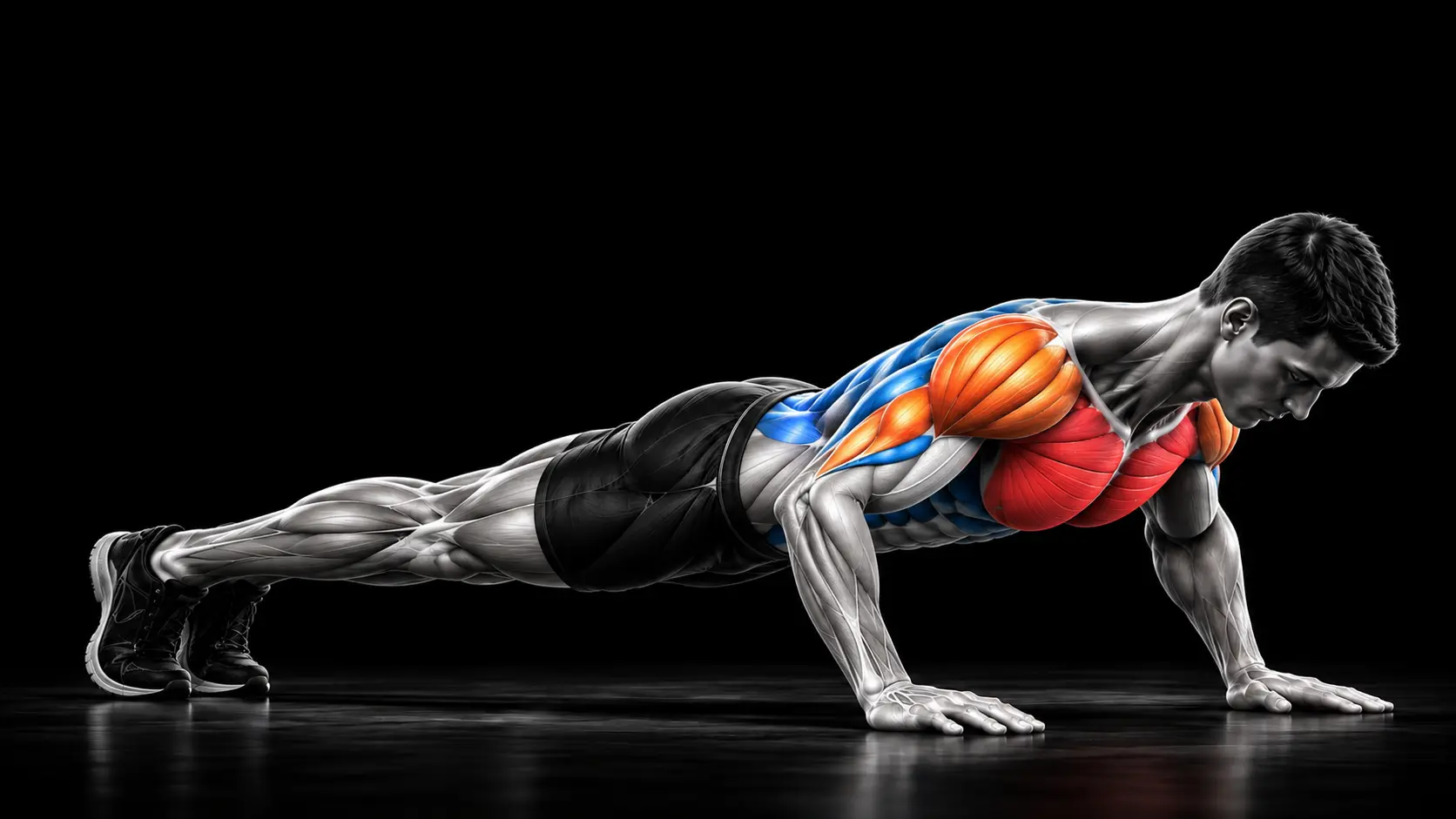
Bend your elbows and lower your chest toward the floor while keeping your body rigid and your elbows controlled. Continue until your chest approaches the floor without losing your body alignment.
Bottom Position
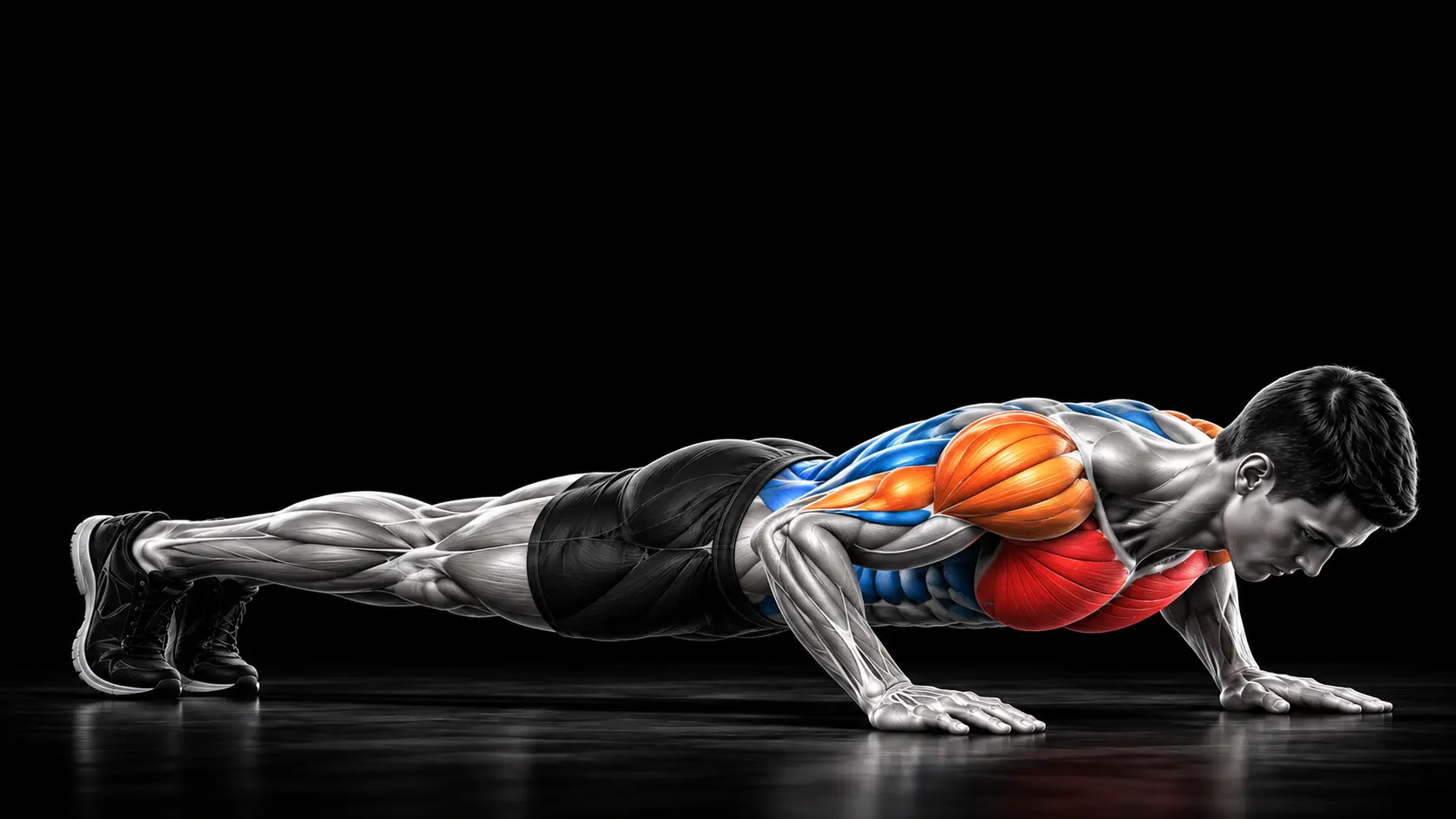
Pause briefly when your chest is close to the floor while maintaining a straight line from your head through your hips to your heels.
Return
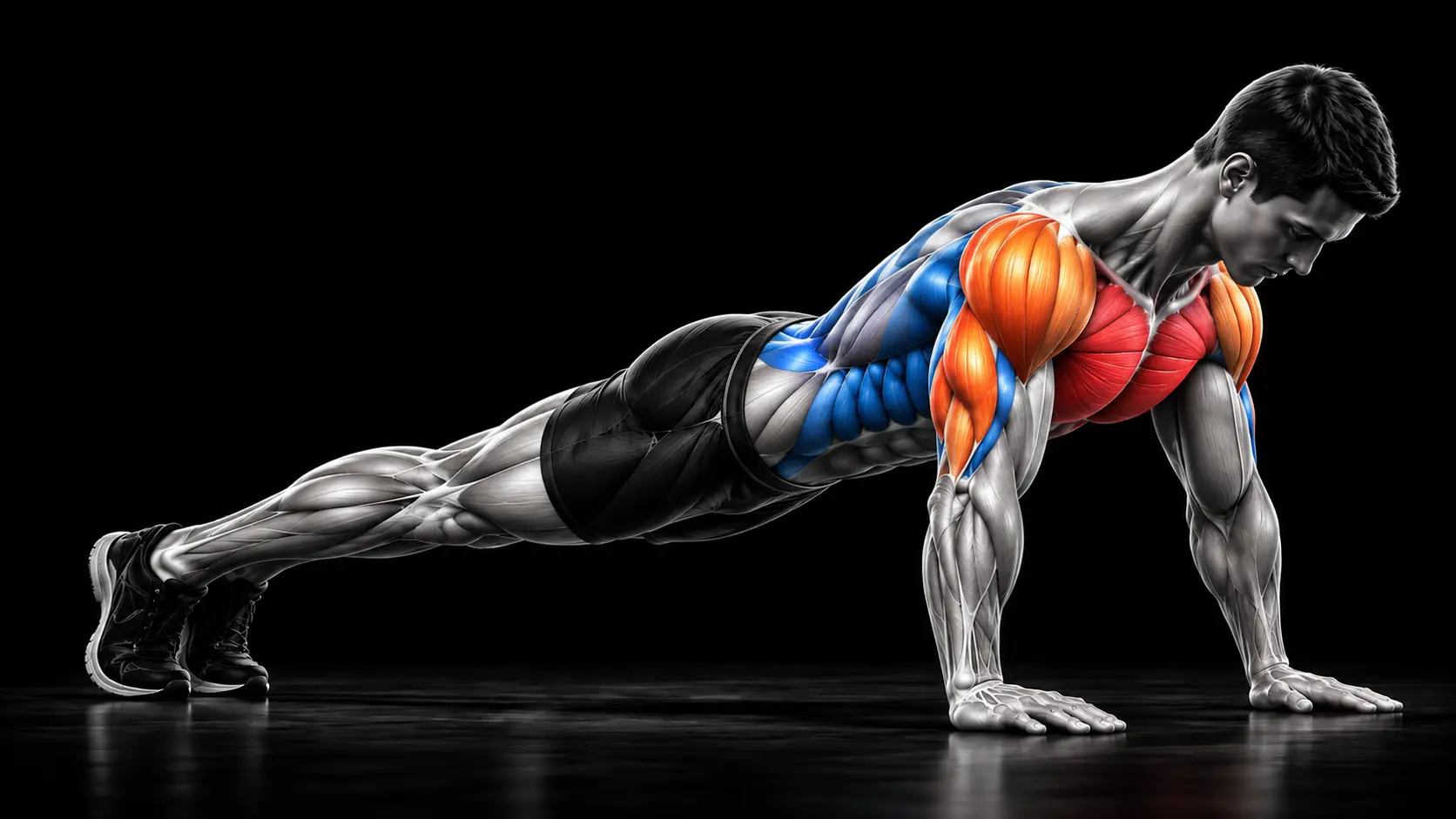
Push through your hands to extend your elbows and return to the starting position. Keep your core engaged and maintain the same body alignment throughout the movement.
Start Position
Start in a high plank position with your hands slightly wider than shoulder-width apart. Keep your arms extended, shoulders stacked over your hands, legs straight, and your body aligned from head to heels.
Movement
Bend your elbows and lower your chest toward the floor while keeping your body rigid and your elbows controlled. Continue until your chest approaches the floor without losing your body alignment.
Bottom Position
Pause briefly when your chest is close to the floor while maintaining a straight line from your head through your hips to your heels.
Return
Push through your hands to extend your elbows and return to the starting position. Keep your core engaged and maintain the same body alignment throughout the movement.
Recommended Reps
8-15
Recommended Sets
3
Rest
60-90 sec
Tempo
2-0-2
Muscles Worked
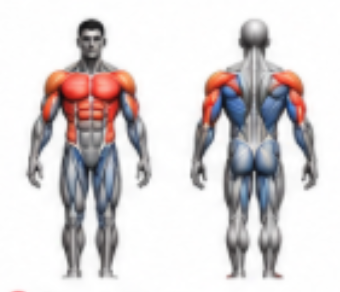
Primary
Secondary
Stabilizer
Training Notes
Use a controlled tempo and stop the set when you can no longer maintain proper body alignment.
Regresion
Progresion
Breathing
Inhale as you lower your body. Exhale as you push back to the starting position.
Key Cues
Keep your body in one straight line. Brace your core throughout the movement. Control the descent. Keep your elbows at a controlled angle rather than flaring them excessively.
Common Mistakes
Sagging or arching the lower back. Flaring the elbows excessively. Lowering the chest without maintaining body alignment. Using momentum instead of controlled movement.